



Unified Patent Court
Jurisdiction of the Unified Patent Court
Structure of the Unified Patent Court
The Unified Patent Court (UPC) is a single court for conventional European patents granted by the European Patent Office (EPO) and for the new European patents with unitary effect (unitary patents), also granted by the EPO. The court's decisions are automatically valid throughout the territory of all 18 European Union states that have acceded to the agreement establishing the unified court: Austria, Belgium, Bulgaria, Denmark, Estonia, Finland, France, Germany, Italy, Latvia, Lithuania, Luxembourg, Malta, Netherlands, Portugal, Romania, Slovenia, and Sweden.
During a transitional period of seven years, expiring on 1 June 2031, it will be possible to remove granted or pending European patents from the jurisdiction of the Unified Patent Court by filing a specific "opt-out" application with the UPC Registry.
The Unified Patent Court is the competent forum for resolving infringement disputes and for revocation/invalidity actions concerning unitary patents or European patents subject to its jurisdiction.
The Unified Patent Court comprises the Registry, the Court of First Instance, and the Court of Appeal. The Court of First Instance is divided into central, local, and regional divisions.
The central divisions are located in Paris, Milan, and Munich. Disputes relating to chemistry and biological and partly pharmaceutical sciences (IPC codes A and C) fall under the Milan central division. Cases relating to mechanical engineering (IPC class F) are heard in Munich, and all other cases fall under the Paris central division.
The Court of Appeal is based in Luxembourg.
Each of the 18 states may have its own local division. As of April 2026, active local divisions are in Vienna (AT), Brussels (BE), Copenhagen (DK), Helsinki (FI), Paris (FR), Düsseldorf (DE), Hamburg (DE), Mannheim (DE), Munich (DE), Milan (IT), The Hague (NL), Lisbon (PT), and Ljubljana (SI). Germany has four local divisions in addition to the central division, and Milan has both the central and the local division.
Regional divisions may be established by two or more countries, such as the Nordic-Baltic regional division, involving Sweden, Lithuania, Estonia, and Latvia.
Further information on the court structure and divisions is available here.
Option to exclude European patents from UPC jurisdiction during the transitional period: opt-in / opt-out
Traditionally, the competent forum for legal disputes concerning conventional European patents remained national: after grant, European patents were converted into a bundle of national patents, each falling under national court jurisdiction. After the transitional period, this route will no longer be available, as all European patents will automatically fall under UPC jurisdiction.
During the transitional period, owners may opt out by filing an OPT-OUT request. In that case, the national courts of the validation states remain competent. A subsequent OPT-IN is possible only under certain conditions: the patent must have been granted with the same claims for all validation states, and no national proceedings may have been initiated.
The opt-out is not available when a patent has already been involved in UPC proceedings.
Until the transitional period expires, European patent owners must decide whether to:
- proceed with the conventional European patent, opting out and validating in each state of interest from the 39(+7) states, with each validation falling under national court jurisdiction;
- proceed with the European patent with unitary effect, obtaining a unitary patent valid in all 18 UPC countries, with the UPC as the competent forum.
The new Unified Patent Court was designed to provide swift and consistent responses to legal disputes involving several European countries.
Fees of the Unified Patent Court
UPC fees comprise a fixed component and a value-based component. The fixed fee for an infringement action is EUR 14,600 (April 2026); the value-based component applies only to cases valued at EUR 500,000 or more.
The value-based fee is calculated in bands. The highest band, for cases valued at EUR 50,000,000 or more, amounts to EUR 430,300. It is estimated that a quarter of all cases fall below the value-based threshold.
The fee for a revocation action is EUR 26,500 (April 2026), with no value-based component. For further details, see the UPC fee schedule.
SMEs, micro-enterprises, non-profit organisations, universities, and public research bodies have access to reduced UPC fees.
Recovery of costs
The losing party is required to reimburse the winning party. Only reasonable and proportionate costs may be recovered. In cases of partial success or exceptional circumstances, the Court may order each party to bear its own costs or indicate an appropriate apportionment.
The maximum recoverable costs depend on the estimated value of the claim. For cases below EUR 500,000, the recoverable amount would be EUR 56,000. It is estimated that a quarter of cases would fall within this band.
Territorial coverage: UPC Agreement vs European Patent Convention
A revocation action before the UPC would have effect over a smaller territory than an EPO opposition. The 18 UPC member states are: Austria, Belgium, Bulgaria, Denmark, Estonia, Finland, France, Germany, Italy, Latvia, Lithuania, Luxembourg, Malta, Netherlands, Portugal, Romania, Slovenia, and Sweden.
The 39(+7) EPC states are: Albania, Austria, Belgium, Bulgaria, Croatia, Cyprus, Czech Republic, Denmark, Estonia, Finland, France, Germany, Greece, Hungary, Iceland, Ireland, Italy, Latvia, Liechtenstein, Lithuania, Luxembourg, Malta, Monaco, Montenegro, Netherlands, North Macedonia, Norway, Poland, Portugal, Romania, San Marino, Serbia, Slovakia, Slovenia, Spain, Sweden, Switzerland, Turkey, United Kingdom (plus optionally Bosnia and Herzegovina, Cambodia, Laos, Georgia, Moldova, Morocco, and Tunisia).
Companies building a structured patent portfolio should carefully consider filing strategies on a case-by-case basis: conventional European patent, unitary patent, or hybrid unitary patent with selective European validations.
Language regime of the Unified Patent Court
Currently the EPO requires a translation of the claims into the other two official EPO languages before grant. Under the new unitary system, unitary patents granted in French or German will require a translation into English, while patents granted in English will need to be translated into another official EU language, with no further translations or national validations.
Further translations may be required in litigation, depending on the languages of the parties and the language regime of the relevant court division. In most cases the language of proceedings may be chosen. In Local and Regional Divisions the patent owner may choose one of the available official languages; in Central Divisions the language of proceedings is the language of grant.
| Local/Regional Division | Languages | |
|---|---|---|
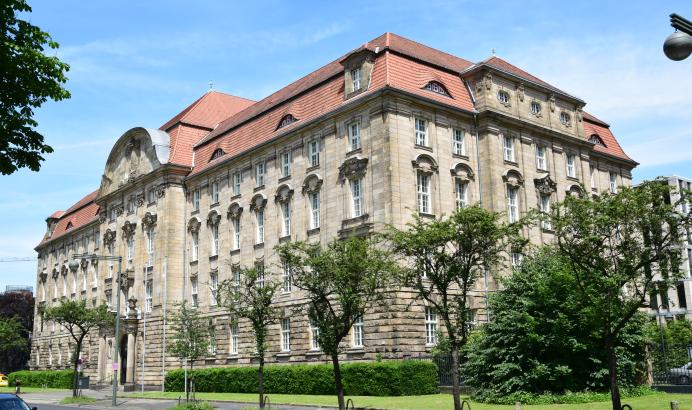 | Düsseldorf, Munich, Mannheim, Hamburg | German, English |
 | Paris | French, English |
 | The Hague | Dutch, English |
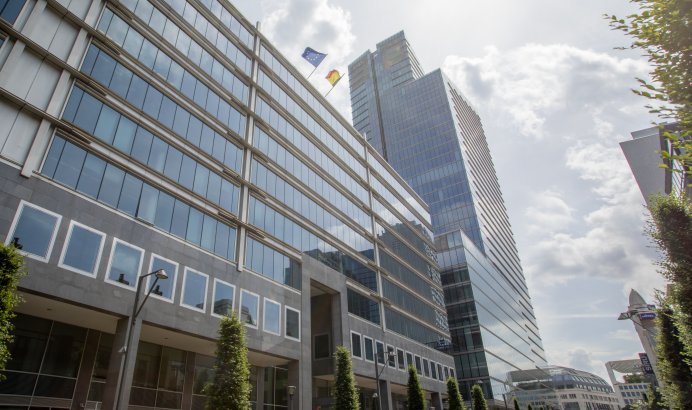 | Brussels | Dutch, French, German, English |
 | Milan | Italian |
 | Helsinki | Finnish, Swedish, English |
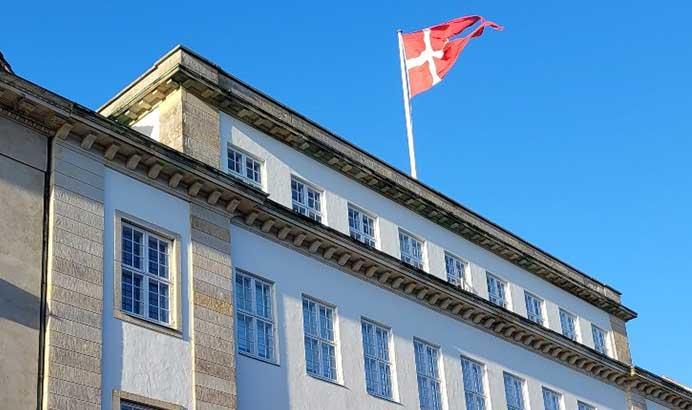 | Copenhagen | Danish, English |
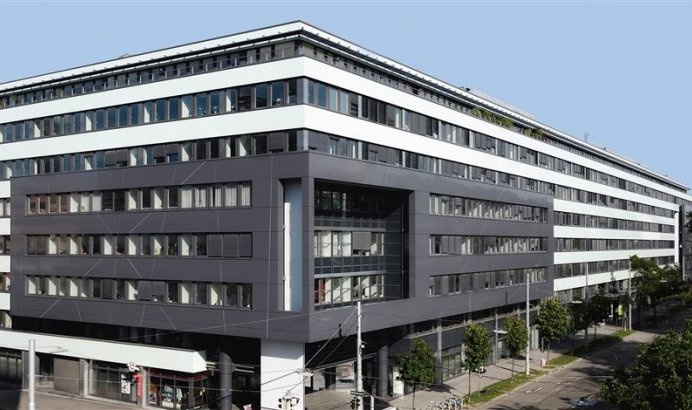 | Vienna | German |
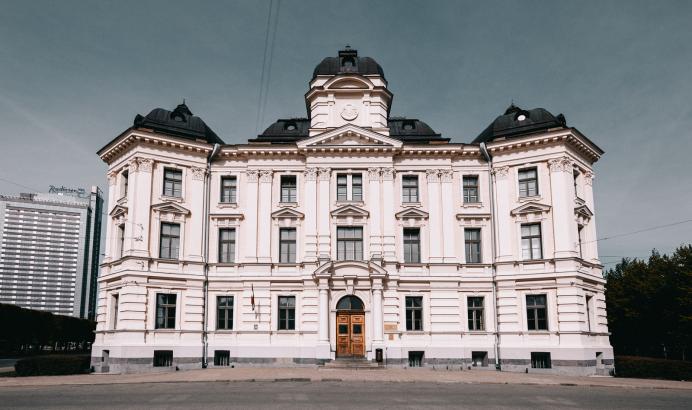 | Nordic-Baltic Division | English |
Actions before the Unified Patent Court
The UPC offers advantages to European patent owners but may also entail risks, such as the possibility of having the patent invalidated across all 18 states.
Action and venue
- Revocation action
Central division only; - Non-infringement action (counterclaim)
Central division only; - Infringement action
Local/regional divisions: where infringement occurred or where the defendant is domiciled – at the patent owner's choice;
Central division: with consent of parties, or if defendant has no EU domicile, or if no local/regional division exists; - Counterclaim for revocation
Local/regional divisions where the infringement action was initiated; the Court may transfer to a central division; - Appeal
Court of Appeal, Luxembourg.
Revocation action
Validity issues are litigated before the Central Divisions. A declaration of invalidity takes immediate effect in all 18 UPC states. Compared to the UPC revocation fee of EUR 26,500, a traditional EPO opposition (approximately EUR 900) remains far less costly. It is possible to oppose a European patent within nine months of grant.
Professional fees before the UPC are also typically higher than for EPO opposition proceedings. Filing an EPO opposition may therefore remain the preferred route before initiating UPC revocation proceedings, especially given the risk of having to bear the other party's costs.
| Revocation action - UPC | Revocation action - EPO (opposition) | |
|---|---|---|
| First instance | 1 year | 2–3 years |
| Appeal | 1 year | 2–4 years |
| Cost recovery | yes, full or partial; based on estimated value | no |
| Fee | EUR 26,500 | approx. EUR 900 |