


Unitary Patent and European Patent
Unitary patent and European patent: the differences
Currently, when the EPO decides in favour of grant, the European patent must be validated in one or more countries of interest to the owner, from among the 39(+7) states reachable through the procedure. Validation requires filing a translation in the national language (where required) and appointing a local representative in each state, which affects costs.
Patents granted under the new system – unitary patents – are automatically valid (without translation or local representative) in all 18 participating states: Austria, Belgium, Bulgaria, Denmark, Estonia, Finland, France, Germany, Italy, Latvia, Lithuania, Luxembourg, Malta, Netherlands, Portugal, Romania, Slovenia, and Sweden.
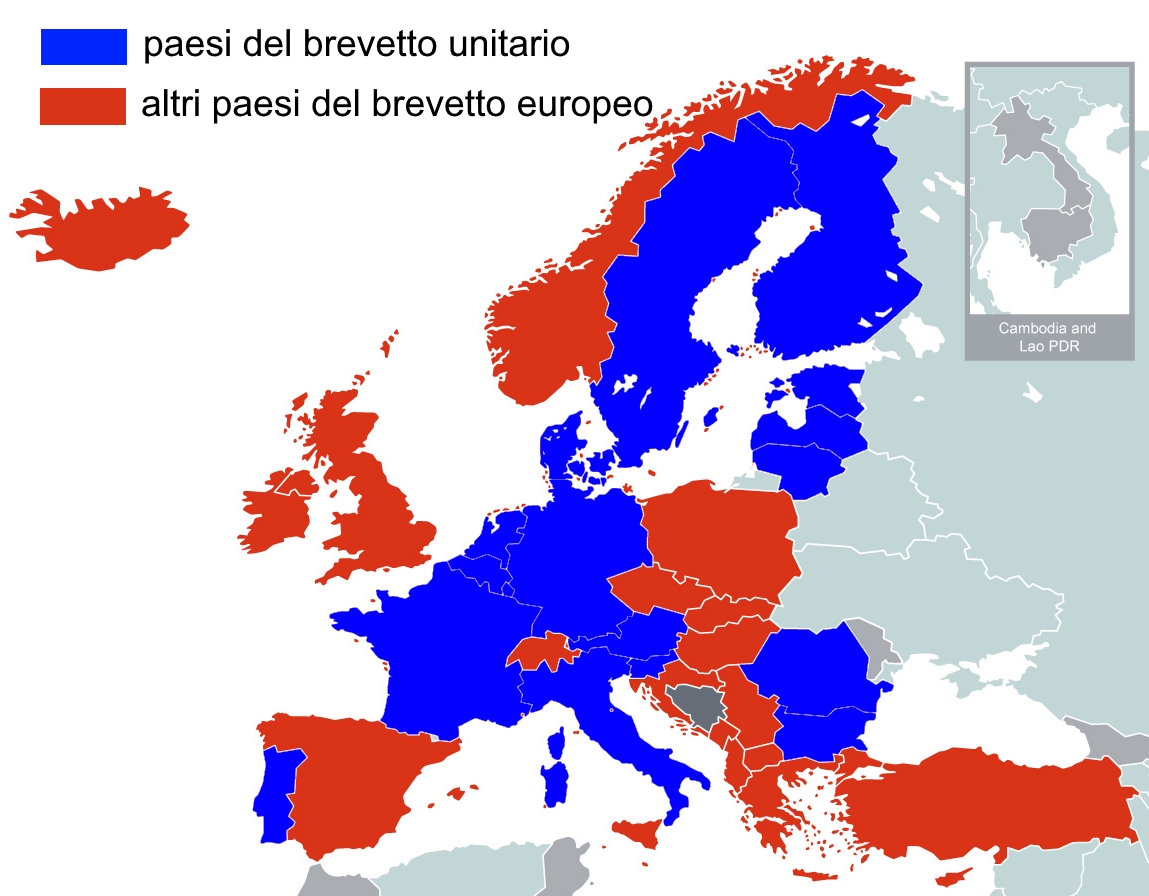
The EU countries that have not yet joined the Unitary Patent system are Spain, Ireland, Poland, Czech Republic, Slovakia, Hungary, Croatia, Greece, and Cyprus. With these countries absent, Unitary Patents cannot be described as Community or EU-wide patents. The legislature intends the unitary patent, together with the UPC, to simplify procedures and reduce costs for patent applicants.
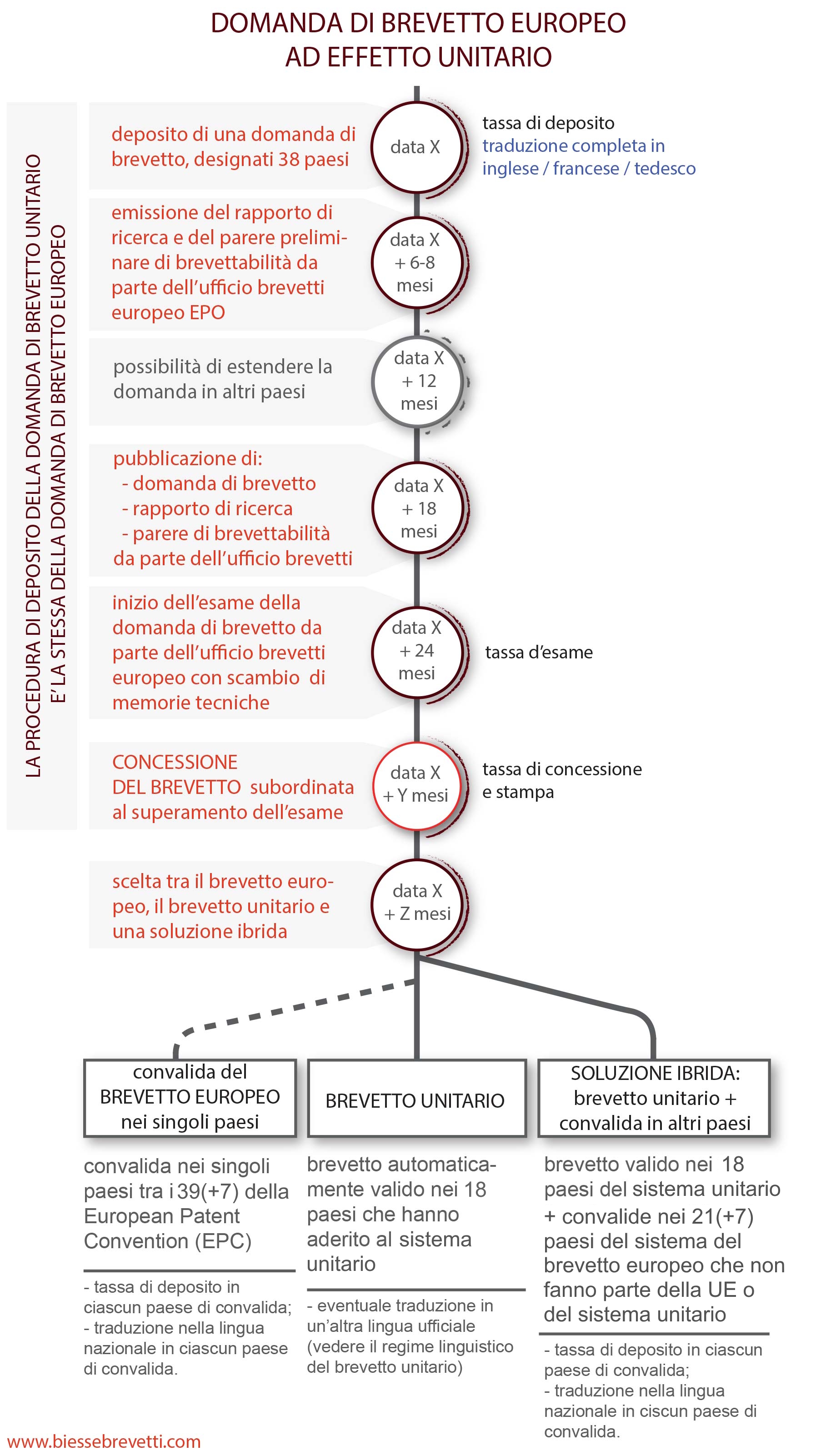
EU member states have asked the EPO to administer the unitary patent system. Filing and examination procedures remain identical to those for conventional European patents. The differences between the two systems only emerge at grant, when the owner decides in which countries to obtain protection.
After grant, the patent owner may opt for:
- a conventional European patent, with individual validations in each state of interest from the 39(+7) states;
- a unitary patent, automatically valid without validations in the 18 participating states;
- a hybrid patent, consisting of a unitary patent plus validations in states of interest that have not joined the unitary system.
The Unified Patent Court (UPC)
The unitary patent is complemented by the centralised Unified Patent Court (UPC), competent for disputes concerning European and unitary patents. The original proposal located the main UPC seat in Paris with branches in London and Munich. Following the UK's departure from the EU, the London seat was transferred to Milan.
The new Unified Patent Court has exclusive jurisdiction also over European patents granted under the conventional European procedure.
The unitary patent procedure
In practice, the procedure for obtaining a hybrid unitary and European patent might develop according to the following scheme.